 Book a demo
Unhappy customers
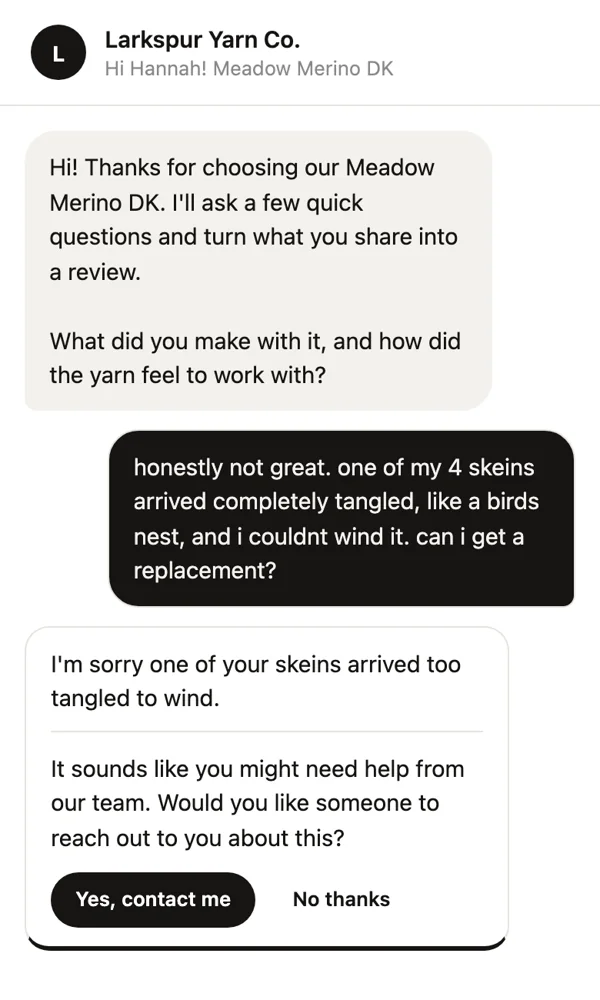
One calm acknowledgement, no arguing and no promises. If the order went wrong, the chat offers to have someone from your team reach out, and the review is flagged for you.
AI-guided reviews
A short chat after purchase asks one or two questions about the product. We draft the review from the shopper's own answers, and they approve it before it's posted.
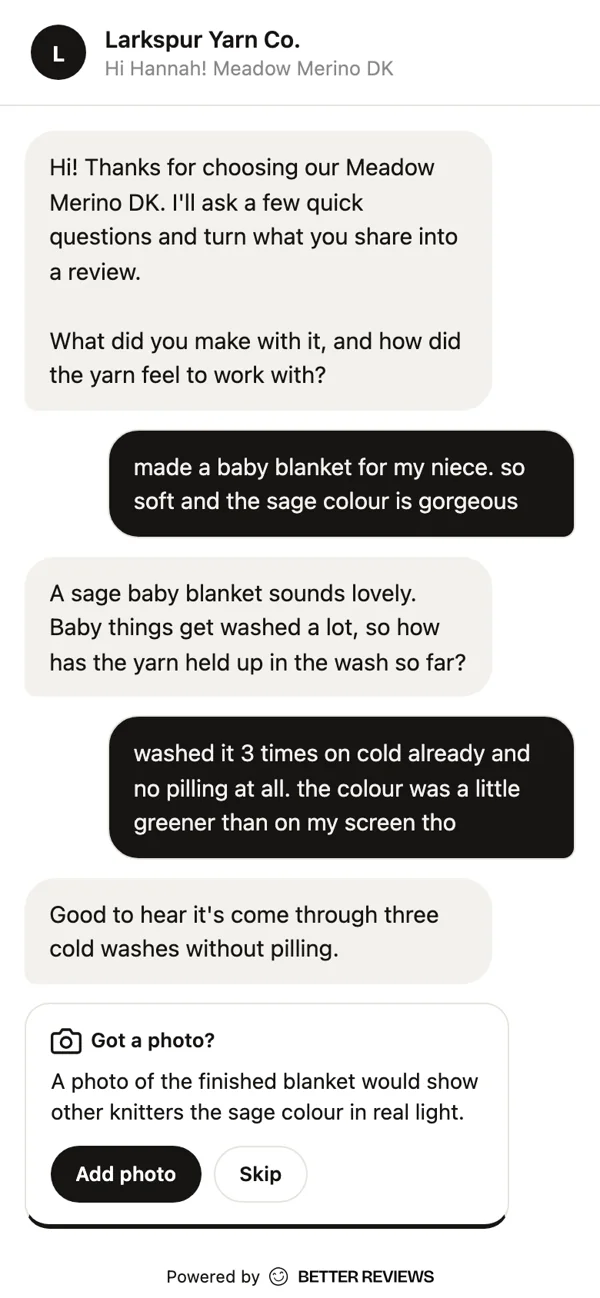
 2 replies · about 3 minutes Editable draft Nothing is posted until they submit
 Median review length on the 489 products that have both AI-guided reviews and reviews imported from other apps. BetterReviews data, October 2026.
Same product, same shopper
Most shoppers don't know what to write, so they write one line. A couple of good questions is all it takes to get what they made, how it held up and what surprised them.
Love it!! So soft 😍
Soft enough for a baby blanket
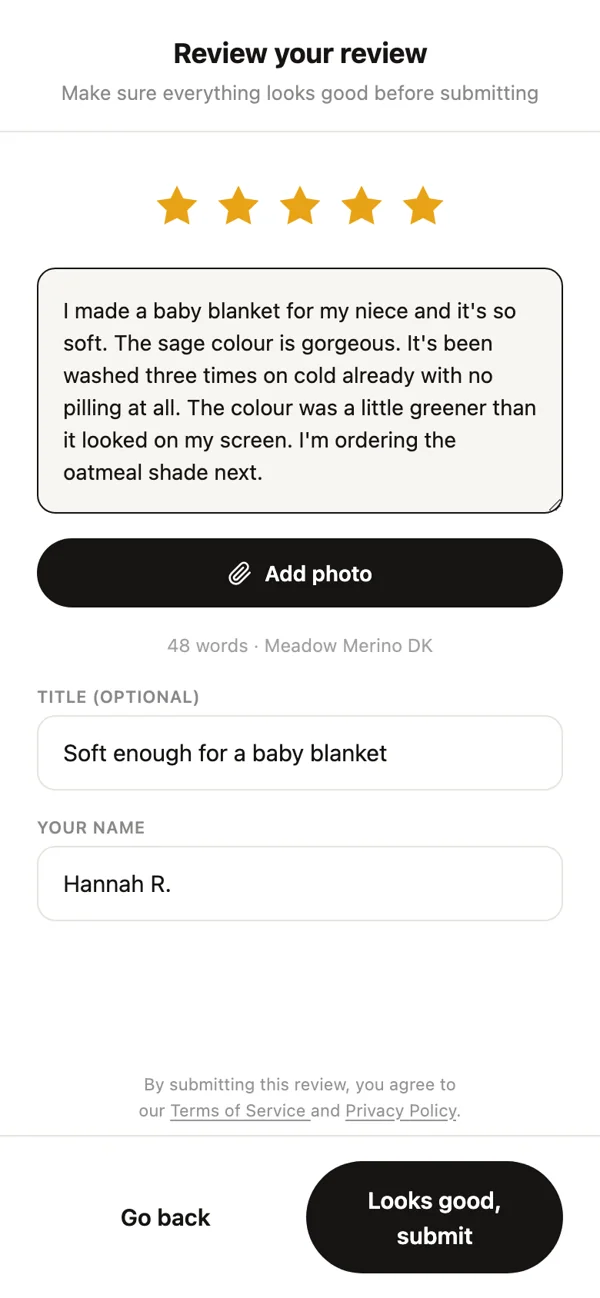
I made a baby blanket for my niece and it's so soft. The sage colour is gorgeous. It's been washed three times on cold already with no pilling at all. The colour was a little greener than it looked on my screen. I'm ordering the oatmeal shade next.
How it works
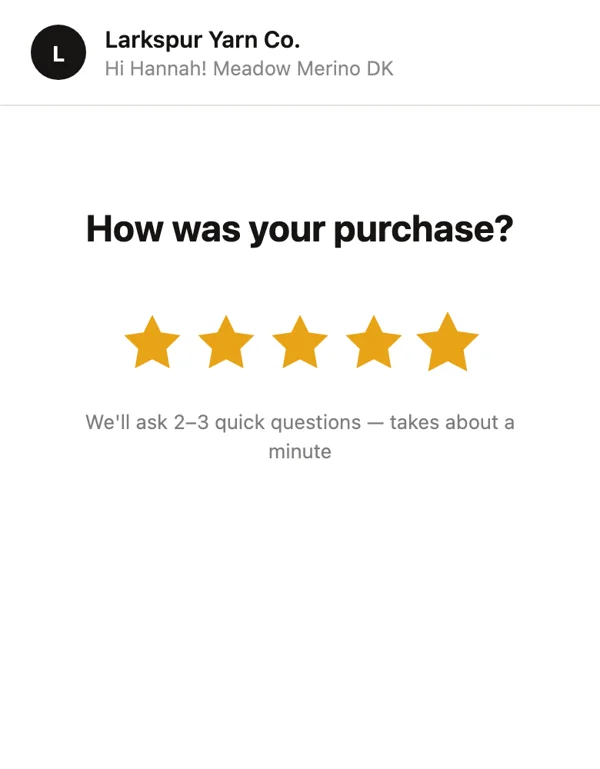
The review request opens on five stars. One tap, and the chat starts in the right tone for that rating.
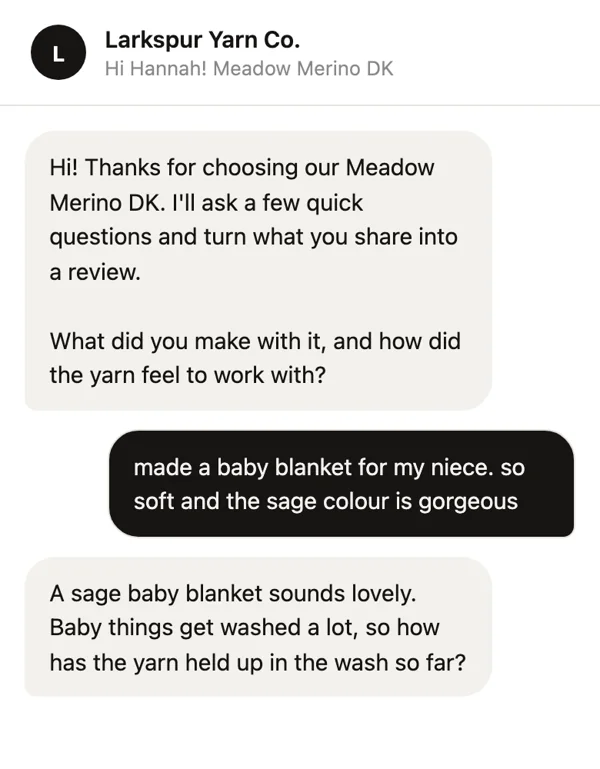
Follow-ups are written for the product and what they just said: what they made, how it held up, what surprised them.
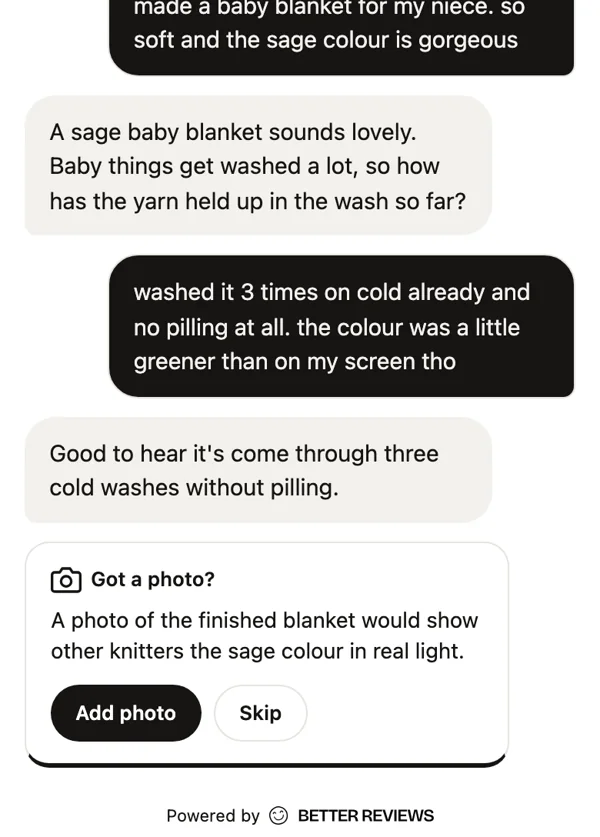
After their second answer, one friendly ask for a photo. Never for an unhappy review.
The chat turns their answers into a draft. They can change any word, add more, or go back to the chat, then tap "Looks good, submit".
Their words, not ours
The chat only drafts the review, from what they typed. Nothing is added that they didn't say or turned into marketing copy, and nothing is posted until they've read the draft, changed what they want and submitted it.
Shoppers type a median of 25 words in the chat. The review they publish has 28.
Handled for you
One calm acknowledgement, no arguing and no promises. If the order went wrong, the chat offers to have someone from your team reach out, and the review is flagged for you.
A short reply gets a specific, easy question back instead of a quiz. The submit button appears once there is enough for a useful review.
Most reviews are written on a phone, so the chat is built for one: full screen, big tap targets, photos straight from the camera roll.
Your store, your voice
The questions are phrased from your brand voice and what we know about the product, and the chat wears your colours.
Where the reviews go
It drafts it from what the shopper typed in the chat. Every detail in the draft has to come from their own answers, in their own wording where possible. The shopper then sees the full draft, can edit every word or go back to the chat, and submits it themselves.
About three minutes, with two replies, at the median. The submit button appears as soon as there is enough for a useful review, and shoppers can keep going if they want to add more.
The chat acknowledges the problem without arguing or promising anything, never asks for a photo, and when something went wrong with the order it offers to have someone from your team reach out. The review is flagged for you in moderation.
From your review request email, from the Write a review button in the widget, or from the review hub when they bought several products. Reviews from your request emails are marked as verified buyers.
Yes. Your brand voice, product details and existing reviews are used to phrase the questions, and the chat takes your colours, corners, font and logo from the conversation editor, with a live preview.
English today.
The Free plan includes 50 AI-guided conversations to try it, then shoppers get the classic review form. The Good plan ($49/mo) includes 150 AI-guided reviews a month, the Better plan ($149/mo) 1,000 and Studio 3,000. When a month runs out, shoppers get the classic form until it resets, unless auto-recharge is on.
More from BetterReviews
Install free, try 50 AI-guided conversations on your own customers, and read the reviews before you decide.